07/07/17

Troyes

Aube

Despite the UK preparing to leave Europe, it does not feel particularly foreign to us.  The same shops, the same cars, the same clothes …..  But, as with Marmite to the British, there are certain things which remain impenetrably ethnically French.  Johnny Halliday would be one (just look on YouTube and ask yourself, why?)  Another would be andouilettes.  These are found all over France, and in the francophone Caribbean, made with veal and sometimes beef but the godhead is in Troyes, where it is made purely and simply with the intestines of pigs.   

I think I will eat almost anything, and sometimes, on freezing winter nights, when I’ve not eaten much all day, I think, andouillettes avec purée de pommes de terre, why not?  It arrives, grilled, which gives a slight tan to its pallor.  It could be an ordinary, rather lumpen large sausage.  And then the sticking point - the smell.  I find there is no disguising the use the ingredients were originally put to. However, enough rigid views of Europe abound in Britain, let us try again.

Christophe Thierry has been running the charcuterie of the same name for 31 years, having taken over the business form his father.  Their andouillettes have the coveted AAAA rating (Association Amicale des Amateurs d’Andouillettes Authentiques, a diploma award by a group of French food writers in 1970).  He generously invited us to visit the kitchen.
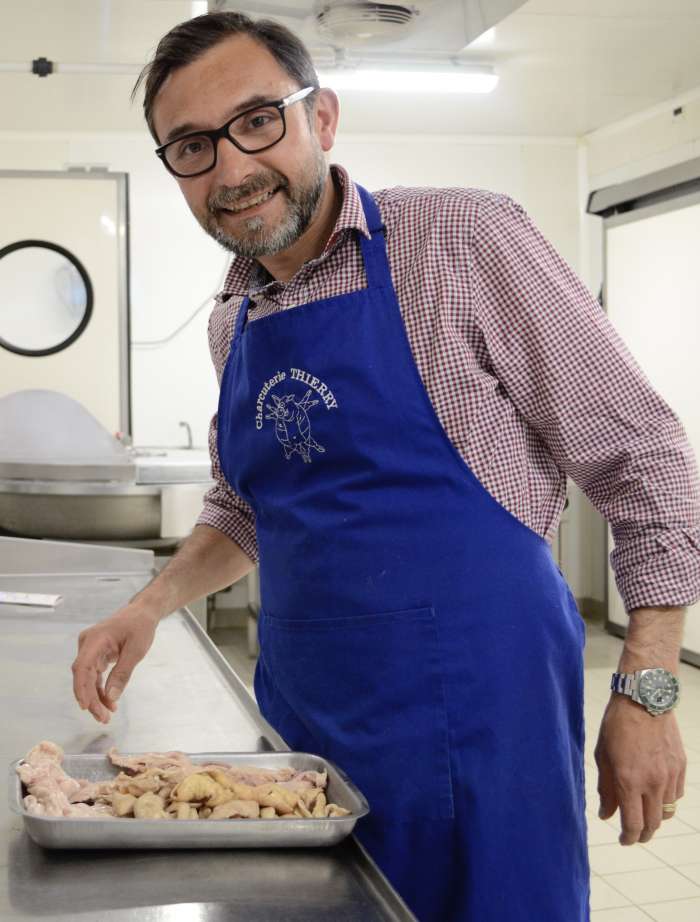
Christophe Thierry, maitre charcutier

More like an operating theatre than a kitchen, the day’s work is over, and all the steel surfaces are bare and spotless.  In the fridge are the ingredients for the next day’s batch - Christophe gets to work, plaiting and twisting and stuffing.  It is the sort of task which would leave the rest of us in a complete funk, festooned with intestines and deciding perhaps to have an omelette instead, but Christophe is a true maestro, clean, neat and beautiful, the andouillette takes about one minute to prepare.  

Regarded by those who know as the best andouillettes in France, the Thierry sausage is served in restaurants from Paris to Marseille.  I am warming slowly to the idea.

The Cellier Saint-Pierre

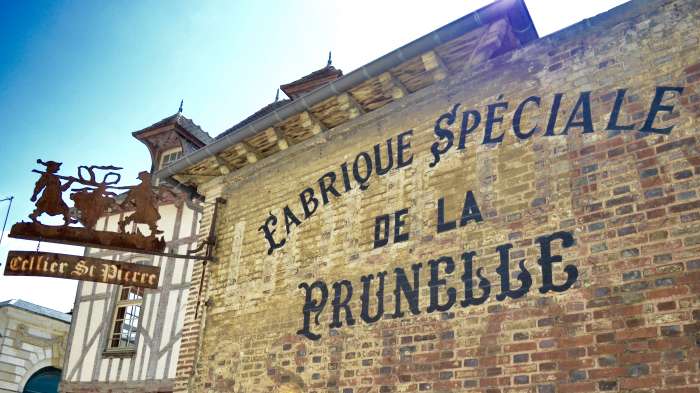
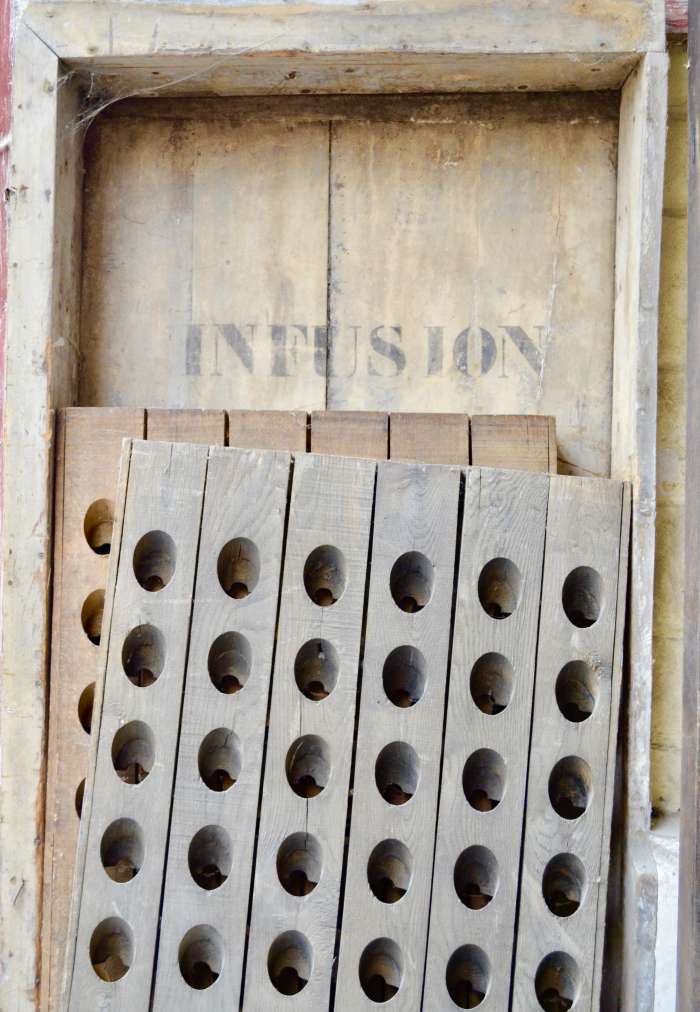
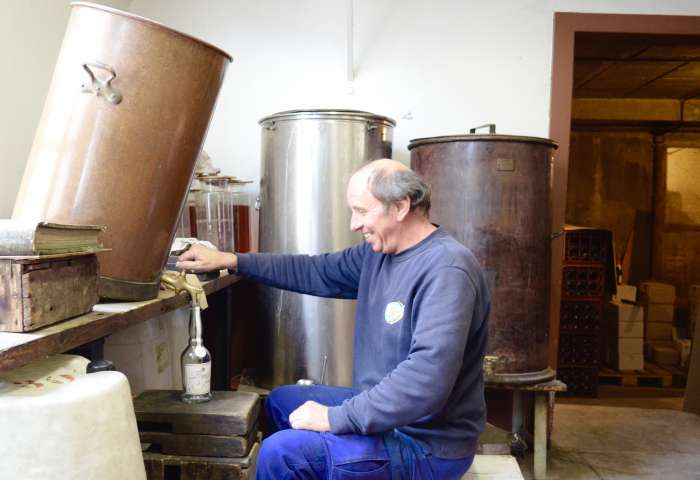
The other uniquely troyen product is the alcohol Prunelle, made from the stones of sloes.  It has been distilled in the Cellier Saint-Pierre, since 1840, receiving a huge boost in popularity during the 1860s when the phylloxera epidemic wiped out most French vines.  Today 10,000 bottles are produced annually using nearly all the original equipment.

Of course, cyanide is present in certain fruit pips, including sloes.  The people of Troyes take a robust view I think, if your constitution can deal  with andouillette, what’s a little cyanide? Prunelle is 40o proof so not for swigging, but it has a light delicate flavour.  The trou champenois is like a kir but with Prunelle and Champagne (the city is in the Aube department, immediately south of Champagne).  It has been particularly recommended poured over coffee éclairs.

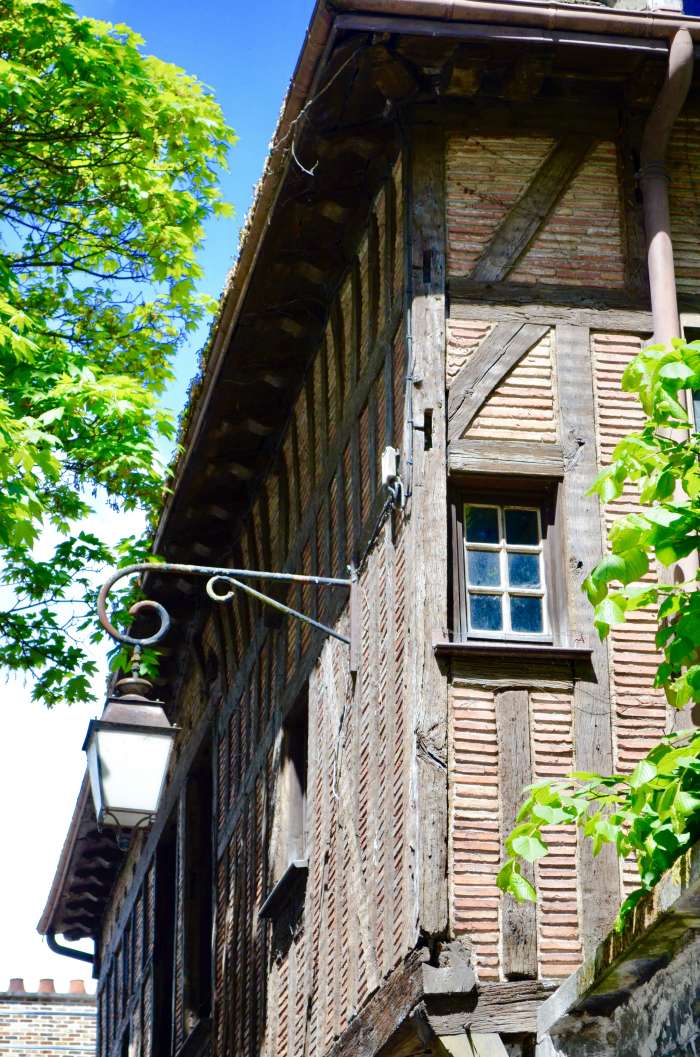
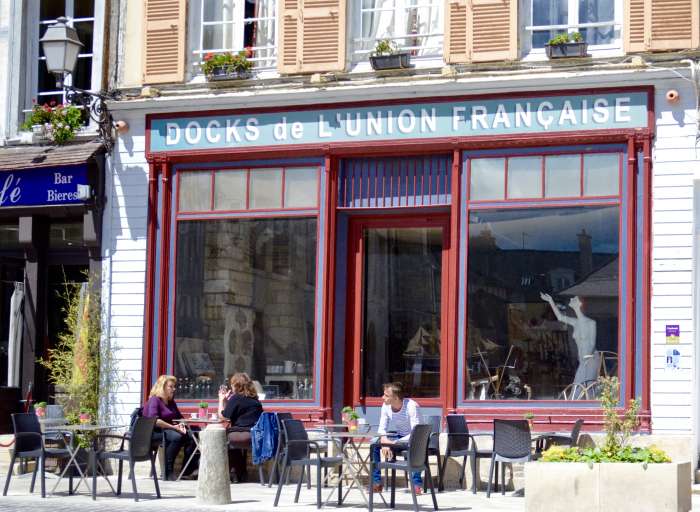
Troyes is a remarkable city, the centre is a perfectly preserved late mediaeval town.  Probably because of its location, too far from Paris and the battle fields of both 20th century world wars to have been damaged, many ancient buildings remain.

Of interest to anglophone visitors, it is where the  Treaty of 1420 was signed, when Henry V of England was betrothed to Catherine, daughter of the French King Charles VI - the most important aspect of this being that he, Henry,  rather than the Dauphin, was to succeed him (hence, I guess, Shakespeare’s portrayal of the Dauphin as an impotent fop).  Just over 60 years later, with the help of Joan of Arc, the French crown recovered the town.

Eric Rohmer's Perceval le Gallois

Chrétian de Troyes is a late 12th century poet, regarded by many as the finest French writer of the time.  He is particularly noted for his poetry on the legend of King Arthur, and, of these, Perceval, the Story of the Grail (Perceval, le Conte du Graal) is the one for which he is most famous.  In 1978, Eric Rohmer, one of the nouvelle vague, made Perceval le Gallois, which featured the story’s characters against a flat mediaeval background.  It is the most extraordinary work, and well worth a look.

Beautifully laid-out, with paths by the canal, and pedestrianised streets, there are many lovely little places to sit and watch the world.  The following two restaurants are particularly recommended (you can try andouillette but there is much else beside).

Aux Crieurs de Vin http://auxcrieursdevin.fr

Chez Félix  http://www.chez-felix.fr

www.andouillette-thierry.fr

www.cellierssaintpierre.fr

Over to the Podcast trio:

Credits

Name Role
Penny Averill Photographs